Wacky Image Search
I've started to pay more attention to the results I get when I search images online.
Chicken Comb Bone
Searching for "chicken skeleton profile" makes me question my knowledge of fowl anatomy.
I'm not an expert on chickens but I'm preeeetty sure that the comb does not have its own bone structure.
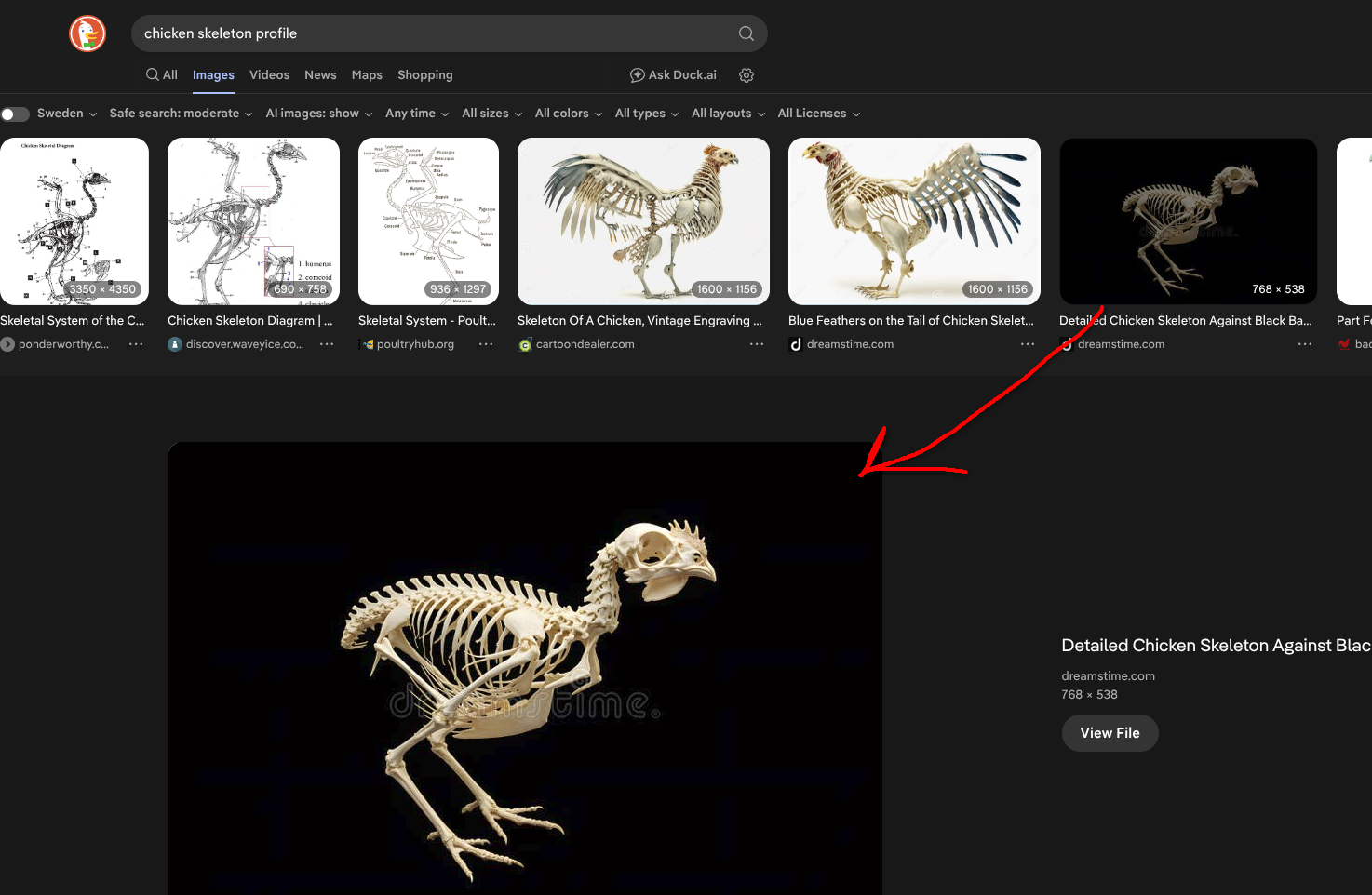
Also, I assume that a chicken skeleton typically does not have feathers attached but I'll give the LLMs style points for that.
This next one kind of looks like an X-ray image but I doubt the feathers and soft tissues like the chicken comb would be visible in a real X-ray.

Here is an image found on Google with a helpful annotation naming the "Comb Base Bone".

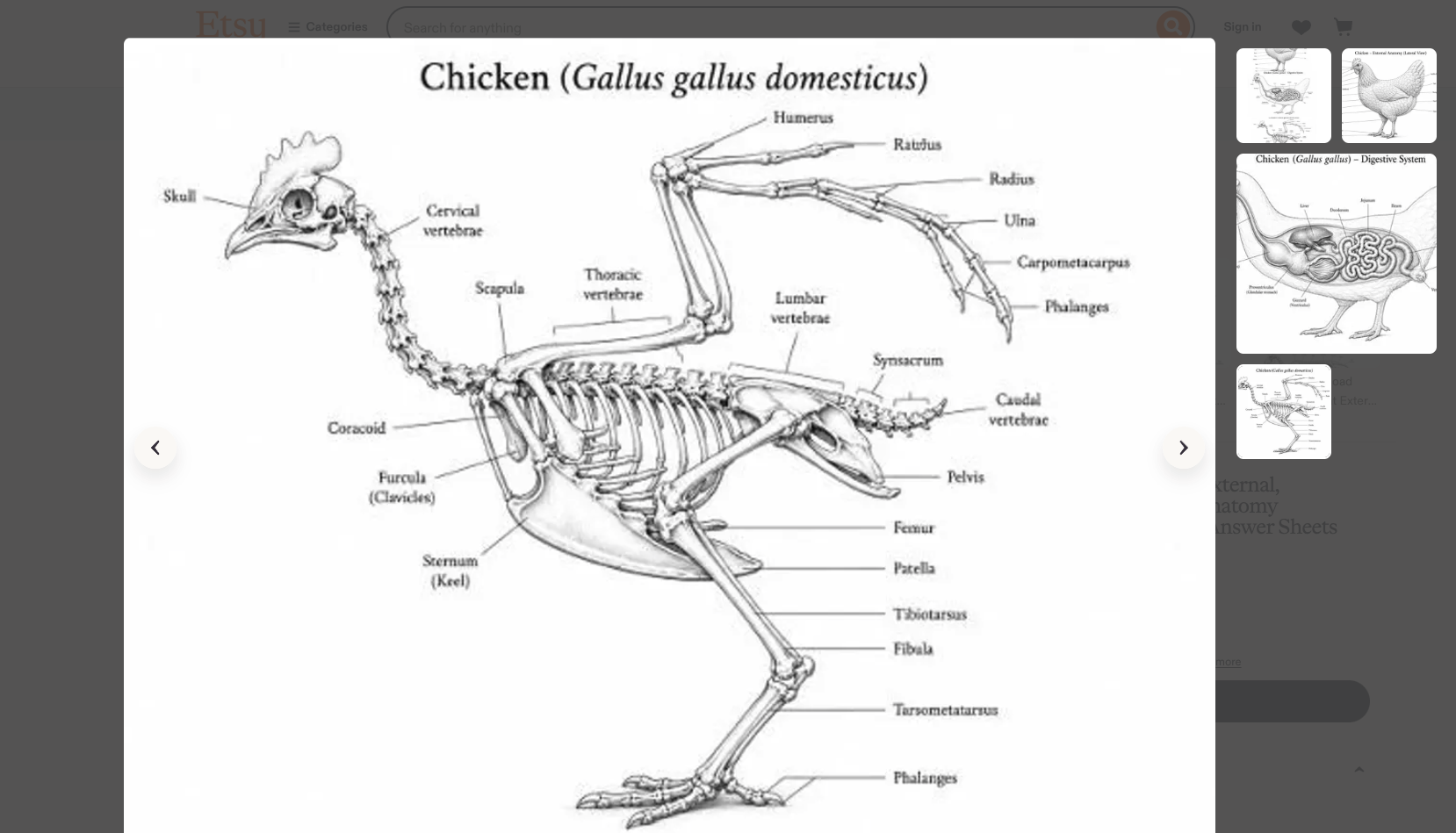
Here is an Etsy page for some kind of poster you can buy on Etsy. It's pretty blurry but hopefully the print is higher resolution if you buy it.
Milkweed and Monarchs
Searching for "milkweed" does bring up lots of images of what I assume are genuine flowering milkweed plants though I am not a botanist so I cannot verify this easily. However, I also get a ton of Monarch butterflies.
Apparently Monarch butterflies are dependent on some Milkweed species as their host plant (The Connection Between Milkweed and Monarch Butterflies), so there is a real connection between these but it just seems a little bit odd that an image search for the plant brings up so very many images of the butterfly.
I know I am over-analyzing this but does this not give the false impression that if I go outside and find a Milkweed it will be covered in Monarchs? On the other hand all the images show flowering plants in nice sunny weather, which is also a skewed view of reality.

The DuckDuckGo results contained way more Monarchs than the Google image results, nearly every single image contained a Monarch. The Google image search results had plenty of Monarchs but only about 1/2 or 1/3 of the images, at a quick glance.
Stirling Engine
Searching for "Stirling engine" shows some genuine Stirling engines alongside this abomination:
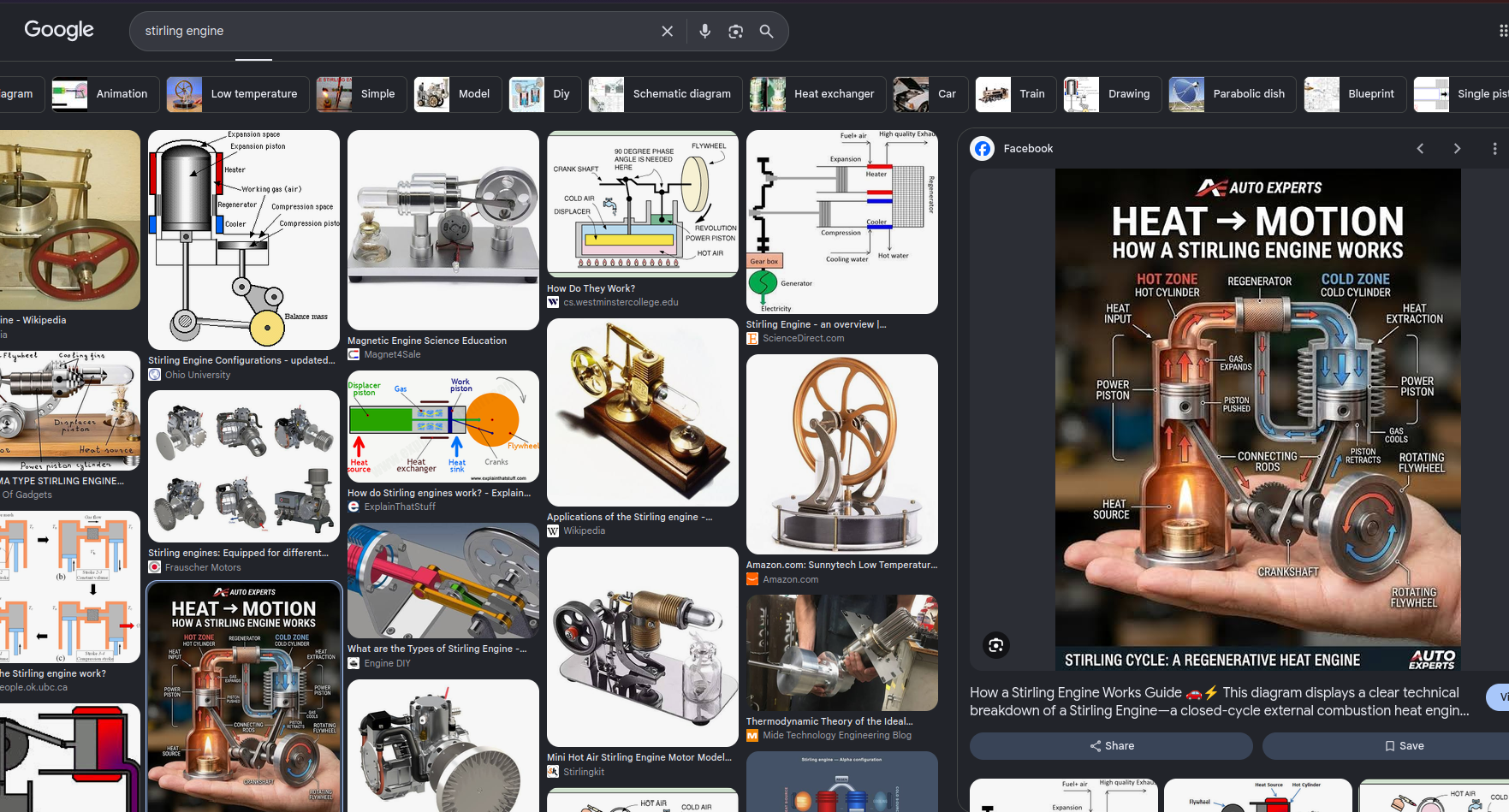
There is so much wrong with this image. Here are just the largest problems:
- The back of the cold piston and the side port from the regenerator vent to the atmosphere, losing the heat gradient and completely defeating the idea of a Stirling engine.
- The heat source is on the wrong side of the hot piston. It should either heat the cylinder on the hot side or heat the piston itself directly such that it primarily acts to heat the gas on the hot side of the piston. With the depicted placement it primarily heats the gas on the back side of the hot piston, with the piston acting as an insulator.
- The closed cavity behind the hot piston is counterproductive as it impedes the motion of the hot piston.